NJ energy benchmarking: which buildings must report, and by when
NJ energy benchmarking requires the owner or operator of each covered commercial or apartment building over 25,000 square feet to report the prior calendar year's energy and water use through EPA's ENERGY STAR Portfolio Manager by July 1 each year. Under the Board of Public Utilities' September 2022 order, that means buildings in property tax class 4A (commercial) and class 4C (apartments for five or more families); condos and class 4B industrial buildings are excluded, and the BPU's benchmarking help desk says co-ops are not covered either. The most recent cycle, for calendar 2025 data, was due July 1, 2026. We don't file benchmarking reports, but the twelve months of electric and gas data a benchmark runs on is the same year of data a utility incentive model for an HVAC replacement starts from.
- Covers
- Over 25,000 sq ft
- Due
- July 1 each year
- Tool
- ENERGY STAR Portfolio Manager
Which buildings have to benchmark
NJ energy benchmarking covers class 4A commercial buildings, class 4C apartment buildings designed for five or more families, and state-owned buildings, each over 25,000 square feet, and the BPU builds the list from the state's MOD-IV tax assessment database.
The property class comes from the tax record, not from how a building is marketed or leased. Class 4A is commercial property. Class 4C is apartment buildings designed for five or more families, so rental multifamily is in once it passes the size threshold.
The threshold is over 25,000 square feet, and it applies to each building. The statute covers "each commercial building over 25,000 square feet," so on a campus every building above the line must be included in the owner's Portfolio Manager submission. The Board encourages owners to include their smaller campus buildings but doesn't require it.
Parking counts in two ways. An attached garage's floor area is added to the building's, so a building and garage that together exceed 25,000 square feet are covered. A stand-alone garage over 25,000 square feet is covered in its own right.
Mixed-use buildings with commercial and residential space are covered when they're classed 4A or 4C. The BPU's benchmarking help desk adds that a building spread over more than one tax parcel can be covered even when one parcel alone is under 25,000 square feet, as long as the whole building is over it.
Condos are out. The order excludes class 2 residential property, and condominiums are class 2, so condo buildings are off the list regardless of size. The help desk states that co-ops are not covered either.
Among the other excluded classes: class 4B industrial property, public schools and other school property (classes 15A and 15B), federal, county and local government buildings (class 15C, apart from state buildings), and church and charitable property (class 15D).
To check a specific building, search the Covered Buildings List on the BPU's BEAM portal. The Board directed that the list be updated every year, so it's worth checking each cycle.
The deadline is July 1, for the year before
New Jersey benchmarking reports are due July 1 each year for the prior calendar year; the Board of Public Utilities set that deadline after the first cycle, when 2022 data was due October 1, 2023.
Each report covers a full calendar year, January through December, because the statute asks for the prior calendar year's energy and water use. Calendar 2025 data was due July 1, 2026.
The Board notifies owners of covered buildings every year. For the reporting season covering calendar 2025 data, New Jersey's Clean Energy Program said owners would be notified in the first quarter of 2026, and that the letter contains the building's New Jersey Unique Building Identification number, or UBID.
A sale or an addition during the year doesn't pause the obligation. The Board ruled out exemptions for both, and directed utilities to provide continuous monthly meter data for the full year even when the owner or the tenants change.
Leave room before July 1. The data request runs through each utility serving the building, and if tenant consent is needed, that step waits on other people's signatures.
What you report, and where the numbers come from
You report twelve months of whole-building energy and water use, entered in EPA's ENERGY STAR Portfolio Manager by the July 1 deadline.
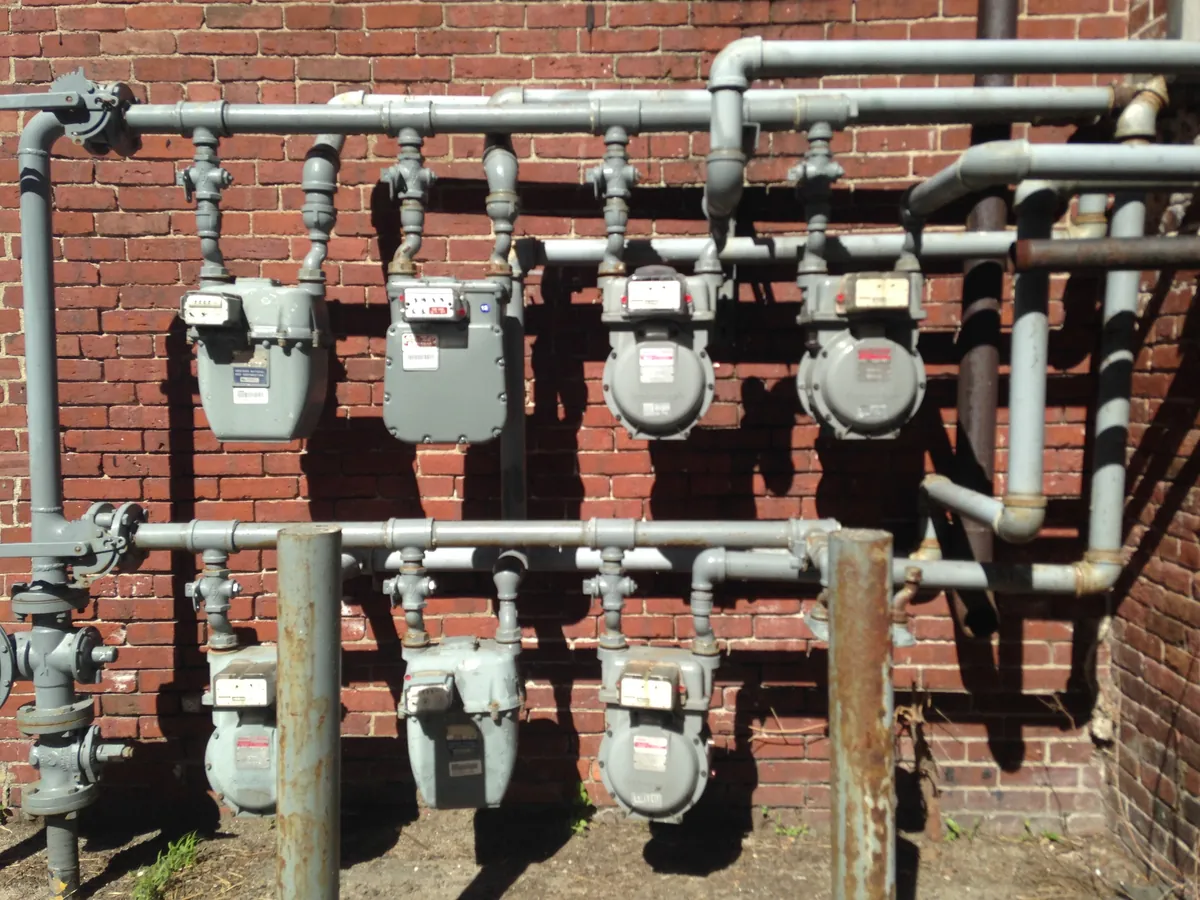
When tenants hold their own utility accounts, the owner can't see that meter data, so the order routes it through the utilities. The owner sends a Data Access Request Form to each utility serving the building. The utility identifies the building's meters and applies what the order calls the 4/50 rule.
If the building has fewer than four tenants, or one tenant uses more than 50% of the energy or water, the owner must request each tenant's written consent before the utility releases that data. The utility provides a Consent Letter for this, and an owner who can't reach a tenant can record a good-faith effort on it.
Otherwise the utility aggregates every meter in the building and gives the owner whole-building totals. Aggregation keeps each tenant's usage anonymous, which is the reason the rule exists.
In practice, the rule works out like this. An apartment building with many separately metered units, none using more than half the building's energy, gets aggregated totals without chasing every resident. A single-tenant office building where the tenant holds the utility accounts, or a retail building where the stores hold their own accounts and one draws more than half the power, fails the rule, and the owner has to request each tenant's written consent first.
Water follows the same rule when tenants, rather than the owner, are the water utility's customers. The order notes that buildings typically have a single master water meter in the owner's name.
The 2022 order also flagged the 4/50 rule and the exemption conditions for review in the second program year, so confirm the current version with the BPU before you plan around it.
The owner doesn't have to do the data entry. The order lets the owner designate a third party, such as the property manager, to complete the Portfolio Manager submission. The BPU also certifies NJ Certified Benchmarkers, people who have passed a test on Portfolio Manager and New Jersey's program rules, and publishes the list on its BEAM help desk.
What the ENERGY STAR score does and doesn't tell you
The ENERGY STAR score runs from 1 to 100: 50 is median energy performance, and 75 or higher marks a top performer that may be eligible for ENERGY STAR certification.
The comparison is against other buildings nationwide with the same primary use, not other New Jersey buildings. For most property types, EPA builds that peer group from the federal Commercial Buildings Energy Consumption Survey (CBECS). For a few, such as hospitals and senior living communities, it relies on industry surveys.
Not every building gets a score. EPA publishes the property types eligible for one, and office, hotel, retail store, supermarket and multifamily housing are among them. A covered building whose property type isn't on EPA's list still has to report; it just won't receive a 1 to 100 score.
The score is a whole-building number. EPA describes it as assessing how the building performs as a whole, given its physical attributes, operations and occupancy.
That is also its limit. A low score says the building performs worse than the median for its type. It can't say whether the cause is a 30-year-old boiler, a rooftop unit with a seized economizer, a control left in manual, or simply how the building is run.
Finding the cause takes someone walking the building and reading the plant. That is the start of an energy audit, not part of benchmarking.
Exemptions, and what happens if you miss it
Owners can request an exemption for a new building, a demolition, a building unoccupied for a full 365 days, a foreclosure or bankruptcy filed during the reporting year, a sale before the reporting year, or other good cause.
New buildings get a full year of operation first. A building isn't added to the Covered Buildings list until the second year after its year-built in MOD-IV. The order's example is a building with a year-built of 2022 that first reports 2023 data, due July 1, 2024.
Each exemption needs evidence: a certificate of approval for demolition, an affidavit or certification of non-occupancy, or proof of the foreclosure or bankruptcy filing. Good cause covers cases such as a building that is under the size threshold or an error on the list.
Requests go through the exemption request form on the BPU's BEAM portal, which lists a sale as a reason, with a deed of sale as the example evidence. For the reporting season covering calendar 2025 data, New Jersey's Clean Energy Program told owners whose building was sold before 2025 to request an exemption. A sale during the reporting year doesn't qualify.
On enforcement, the Board's 2022 order adopted Staff's recommendation that no fines be levied. For the first two program years, it gave owners a 90-day grace period after the deadline before they were deemed nonresponsive.
After those two years, the order directed Staff to analyze compliance rates and re-evaluate how to motivate compliance. The order doesn't say what applies after that, so for the current position ask the BPU's benchmarking help desk on the BEAM portal rather than relying on the 2022 terms.
From a benchmark to an incentive model
A benchmark shows how a building compares with its peers, but it doesn't size an incentive: New Jersey's custom and engineered utility pathways pay on the modeled saving for the specific equipment replaced, and that model starts from the same twelve months of bills.
The two ask for overlapping data. Both need a full year of the building's energy use, and both run into the same practical problem: the electric and gas history often sits with two different companies.
What each does with it differs. Benchmarking compares the whole building with a national peer group. On the custom and engineered pathways, an incentive model looks at specific plant, what it uses now and what its replacement would use, and the utility pays on the gap; prescriptive rebates use a published per-ton or per-MBH rate instead.
That makes a benchmark a useful prompt rather than an answer. If the building compares poorly and its boiler, chiller or rooftop units are old, the next step is a survey of that plant, which is where an incentive figure comes from.
To be clear about scope: we don't file benchmarking reports. The owner does, or a third party the owner designates, such as a property manager or an NJ Certified Benchmarker.
Our work is the incentive side of an HVAC replacement: the survey, the energy model, the utility application and the coordination. Licensed partner contractors carry out the installation.
If you've already pulled a year of bills for benchmarking, keep them together. On custom and engineered HVAC projects the incentive has to be approved before any equipment is bought, and that year of data is what the model is built from.
Common questions
Who has to do energy benchmarking in New Jersey?
In New Jersey, the owner or operator of each covered commercial or apartment building over 25,000 square feet must benchmark. Under the Board of Public Utilities' 2022 order, that means buildings in property tax class 4A (commercial) and class 4C (apartments for five or more families), plus state-owned buildings. You can check a specific building on the Covered Buildings List on the BPU's BEAM portal.
When is the NJ benchmarking deadline?
New Jersey benchmarking is due July 1 each year, covering the prior calendar year's energy and water data. The first year was the exception: 2022 data was due October 1, 2023. Calendar 2025 data was due July 1, 2026.
Do condos and co-ops have to benchmark in NJ?
No. The Board of Public Utilities' 2022 order excludes class 2 residential property, which takes in condominiums regardless of size, and the BPU's benchmarking help desk states that condos and co-ops are not covered.
Is there a penalty for missing NJ benchmarking?
The Board of Public Utilities' September 2022 order adopted Staff's recommendation that no fines be levied. It gave owners a 90-day grace period after the deadline in each of the first two program years before they were deemed nonresponsive, and directed Staff to re-evaluate how to motivate compliance after that. For the current position, ask the BPU's benchmarking help desk on the BEAM portal.
Can someone else submit our benchmarking report?
Yes. The Board's order lets a building owner designate a third party, such as the property manager, to complete the Portfolio Manager submission, and the BPU publishes a list of NJ Certified Benchmarkers who have passed a test on Portfolio Manager and the state's program rules. Rivet doesn't file benchmarking reports; we work on the utility incentive side of HVAC replacements.
Sources
- P.L.2018, c.17, section 4(b) (N.J.S.A. 48:3-87.10(b))The statute: the Board shall require the owner or operator of each commercial building over 25,000 square feet to benchmark energy and water use for the prior calendar year using EPA's Portfolio Manager tool.
- NJ Board of Public Utilities order, September 7, 2022, Docket QO21071023Covered classes 4A, 4C and state buildings; the excluded classes, including class 2, which takes in condominiums; the building-level, garage and mixed-use rules; October 1, 2023 for the first year and July 1 after; the 4/50 rule and Data Access Request Form; exemptions; third-party designation and NJ Certified Benchmarkers; no fines and a 90-day grace period for the first two years.
- New Jersey's Clean Energy Program: energy and water benchmarkingThe reporting season for calendar 2025 data and its July 1, 2026 deadline, first-quarter owner notification, the UBID in the notification letter, and the current exemption reasons, including the exemption request for a building sold before 2025.
- BPU benchmarking help desk (BEAM): Is my building covered?States that condos and co-ops are not covered and state-owned buildings are; explains multi-parcel buildings and how to check coverage.
- BPU benchmarking help desk (BEAM): Covered Buildings ListThe searchable list of covered buildings.
- BPU benchmarking help desk (BEAM): exemption request formExemption reasons and example evidence for each, including a deed of sale for a sold building.
- BPU benchmarking help desk (BEAM): NJ Certified BenchmarkersCertified Benchmarkers have passed a test on Portfolio Manager and New Jersey's program rules; links to the current list.
- ENERGY STAR: how the 1–100 score is calculated50 is median performance and 75 or higher is a top performer that may be eligible for certification; peers are buildings nationwide with the same primary use, drawn from CBECS for most property types.
- ENERGY STAR: property types eligible for a scoreThe property types that can receive a 1–100 score, including office, hotel, retail store, supermarket and multifamily housing.
- NJ Board of Public Utilities: approval announcement, September 7, 2022The Board's announcement of the benchmarking program approval.
Where this connects across the site
- Commercial energy auditsHow a survey and energy model turn a year of bills into an incentive figure
- How incentives are calculatedWhy the equipment you replace sets the number
- When to applyWhy the application has to go in before the equipment
- Demand chargesWhy one afternoon's peak can shape a commercial electric bill
- MultifamilyClass 4C apartment buildings, and how their HVAC retrofits are funded
- Office buildingsClass 4A offices and the replacements their incentives fund
- How NJ commercial energy rebates workWhich utility runs your program, and the range
- NJ Clean Energy ProgramThe pathways: Direct Install, prescriptive, custom and engineered
- How a retrofit runsSurvey, model, application, install, in that order
Related equipment
More guides
- A2L refrigerants and the R-410A phase-outYour existing equipment is not illegal, and you are not required to replace it. What actually changed, and what it means for a planned retrofit.
- HVAC economizersThe most expensive failure in commercial HVAC produces no service call, no complaint and no alarm. It just quietly doubles what cooling costs.
- Commercial energy auditsThe survey and the energy model are not paperwork. The model is what sets your incentive, which is why it comes before any pricing conversation.
- Demand chargesTwo buildings can use identical total electricity and get very different bills. The difference is usually demand.
- Steam vs hot water boilersA great deal of New Jersey's prewar apartment stock still heats with steam. What that means when the plant reaches end of life.
- VRF systemsVariable refrigerant flow is not a premium version of a split system. It solves a specific problem, and in the wrong building it is the wrong answer.
- How incentives are actually calculatedThe incentive is a payment for the energy you stop wasting. That one fact rearranges almost everything owners assume about which projects are worth doing.
- When to apply, and why the order mattersInstalling first is the single most expensive sequencing mistake in New Jersey commercial HVAC. It costs money in three separate ways, and the worst one is invisible.
- How long commercial HVAC actually lastsEvery page answering this question gives a different number and none of them say where it came from. The figures that can be traced run longer than the ones being repeated.
Already pulled your year of data?
The same twelve months of electric and gas bills is where an incentive model for an HVAC replacement starts. That is a phone call, not a commitment.