Commercial Ductless Mini-Split Retrofits in New Jersey
A great deal of New Jersey's older commercial and multifamily stock was built with radiators and no ductwork whatsoever. Retrofitting conventional duct into those buildings is destructive and expensive. Ductless is not a compromise here — for this building stock it is the correct engineering answer.
- Typical incentive
- 50–80% of cost
- Strongest fit
- Prewar multifamily
- Also delivers
- Per-tenant zone control
Why is ductless so common in New Jersey retrofits?
Because so much of the state's building stock predates ducted air entirely. Buildings across Hudson, Essex, Passaic and Bergen counties were built with boilers and radiators, and there is nowhere to run a duct without demolition.
A ductless system routes a pair of small refrigerant lines and a condensate drain through a three-inch penetration. The wall stays a wall, the plaster stays intact, and the ceiling height stays where it is.
For a multi-tenant building the second advantage is metering and control: each zone runs independently, which resolves the perennial argument about one thermostat serving spaces with completely different loads.
Does ductless work at commercial scale?
Yes. Multi-zone and VRF systems run entire buildings, with a single outdoor plant serving many indoor heads across multiple floors.
The distinction between a residential mini-split and a commercial VRF system is capacity and control sophistication rather than concept. Both move refrigerant to distributed indoor units instead of moving air through ducts.
Where does the outdoor equipment go?
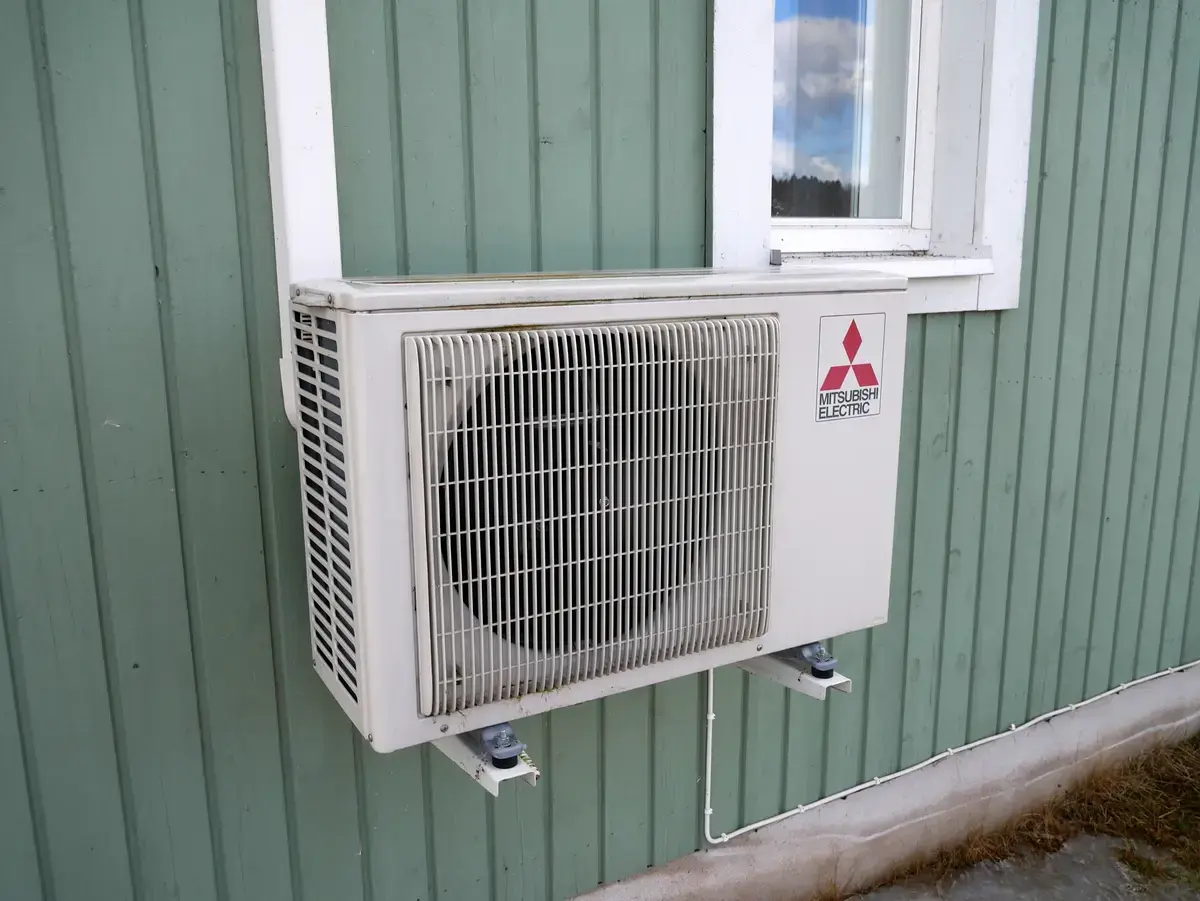
Roof, rear elevation, or a screened ground pad — and in dense urban buildings that question is settled before anything is specified.
In Jersey City, Hoboken and similar dense areas, the binding constraint is frequently not engineering but what the building and the municipality permit on a visible elevation. Historic district review and condominium board approval are resolved up front rather than after equipment is ordered.
Common questions
Are these the same units used in houses?
The concept is the same; commercial installations use larger multi-zone and VRF equipment serving many indoor heads from shared outdoor plant.
Can they heat as well as cool?
Yes — a ductless system is a heat pump. Cold-climate models hold capacity well below New Jersey design temperatures.
Can the existing boiler stay?
Frequently yes, retained as backup heat while the ductless system carries the majority of the season.
Find out what your building qualifies for
A survey and an energy model tell you the real number. That is a phone call, not a commitment.
Mini-splits by building type
Where this connects across the site
- How a commercial HVAC retrofit worksSix steps, and the two you are involved in
- NJ commercial energy rebates by utilityWhich utility runs your program, and the range
- Commercial HVAC replacement in NJReplacing mini-splits as a planned, incentive-funded project
- HVAC rebate application in NJThe utility package we prepare and file before the old unit comes out
- Retrofitting heat in older apartment buildingsMost of New Jersey's older apartment stock still heats with a boiler. When that plant reaches the end of its life there are three routes, and each one is paid for differently.
- VRF systemsVariable refrigerant flow is not a premium version of a split system. It solves a specific problem, and in the wrong building it is the wrong answer.
Counties where we run this most
Related equipment
- Heat pumpsAir-source and water-source heat pumps, including conversions from a boiler and separate cooling.
- PTACHotels and older apartment buildings, replaced floor by floor.
- BoilersSteam and hot water boilers in apartment and commercial buildings, and when replacing one pays.
- Equipment life expectancy chartHow long this equipment lasts, by ASHRAE, DOE, NJ and Fannie Mae