Commercial Chiller Replacement in New Jersey
Where a building has a chiller, it is almost always the largest single electrical load on the site. That makes it the highest-value efficiency target available — and it makes the incentive calculation straightforward, because the savings are measured in a currency the utility cares about a great deal: summer peak demand.
- Typical incentive
- 50–80% of cost
- Common in
- Office, healthcare, large retail
- Key driver
- Summer peak demand
Why do utilities pay so well for chiller upgrades?
Because chillers run hardest on exactly the days the grid is most stressed. Reducing a building's summer peak draw is worth more to a utility than an equivalent saving spread across the year.
That is the mechanism behind the incentive. A high-efficiency chiller does not only cut the building's consumption; it shaves the load at the moment the utility is paying the most to serve it. Programs are structured to reward exactly that.
The practical result is that chiller projects, despite being large capital items, are frequently among the best-supported retrofits in the state.
What makes an existing chiller a good replacement candidate?
Age, refrigerant type, and how it behaves at part load. A constant-speed machine that has to run at full compressor output regardless of the load is the clearest case.
Most buildings spend the overwhelming majority of their cooling hours well below design load. A constant-speed chiller handles that badly. Variable-speed drive machines modulate compressor output to match, and the efficiency difference at part load is far wider than the difference at full load — which is where nearly all the operating hours actually are.
Refrigerant is the other factor. Machines still running on older refrigerants face a tightening and increasingly expensive service supply.
How disruptive is a chiller replacement?
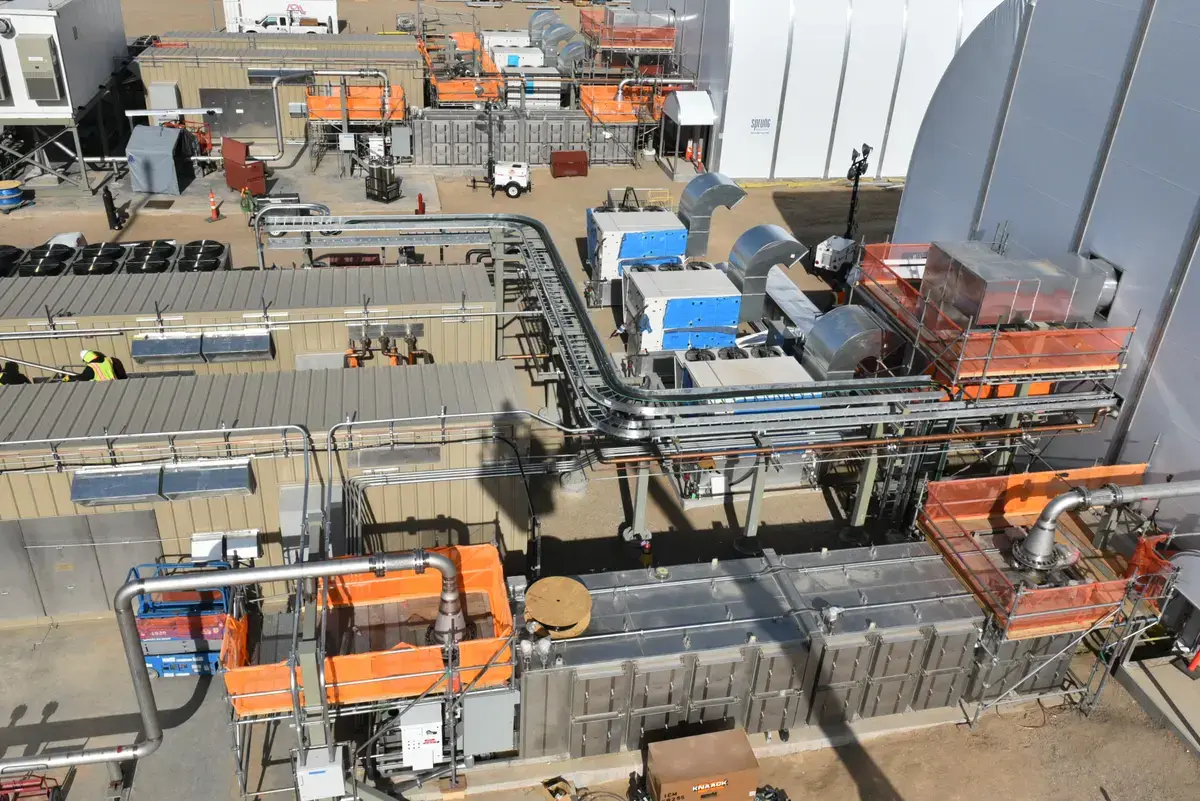
It is a planned capital project, not an emergency swap. Rigging access, structural path and the shutdown window are all worked out before anything is ordered.
The constraint is usually getting the machine in and out rather than the mechanical work itself. Where access is genuinely difficult, modular machines that can be assembled in place are an option.
Projects are scheduled for the shoulder season wherever the building's operation allows it.
Common questions
Do you do cooling towers as well?
Tower condition is assessed as part of a chiller project, since plant performance depends on both sides of the system.
Can you work around our operating schedule?
Yes. Shutdown windows are agreed before equipment is ordered, not negotiated during the job.
What size chillers do you work with?
Commercial plant across the range typically found in New Jersey office, healthcare and large retail buildings.
Find out what your building qualifies for
A survey and an energy model tell you the real number. That is a phone call, not a commitment.