Commercial HVAC replacement in New Jersey with utility incentives
Commercial HVAC replacement in New Jersey can be partly paid for through your electric and gas utilities' incentive programs, which commonly cover 50 to 80% of project cost. For rooftop units, boilers, chillers, PTACs and heat pumps in existing commercial and multifamily buildings, we document the old equipment and prepare everything the utility reviews before it makes an offer, and licensed partner contractors install the replacement. File before the old equipment comes out, because New Jersey measures the savings on a working unit against that unit and custom projects need approval before anything is bought.
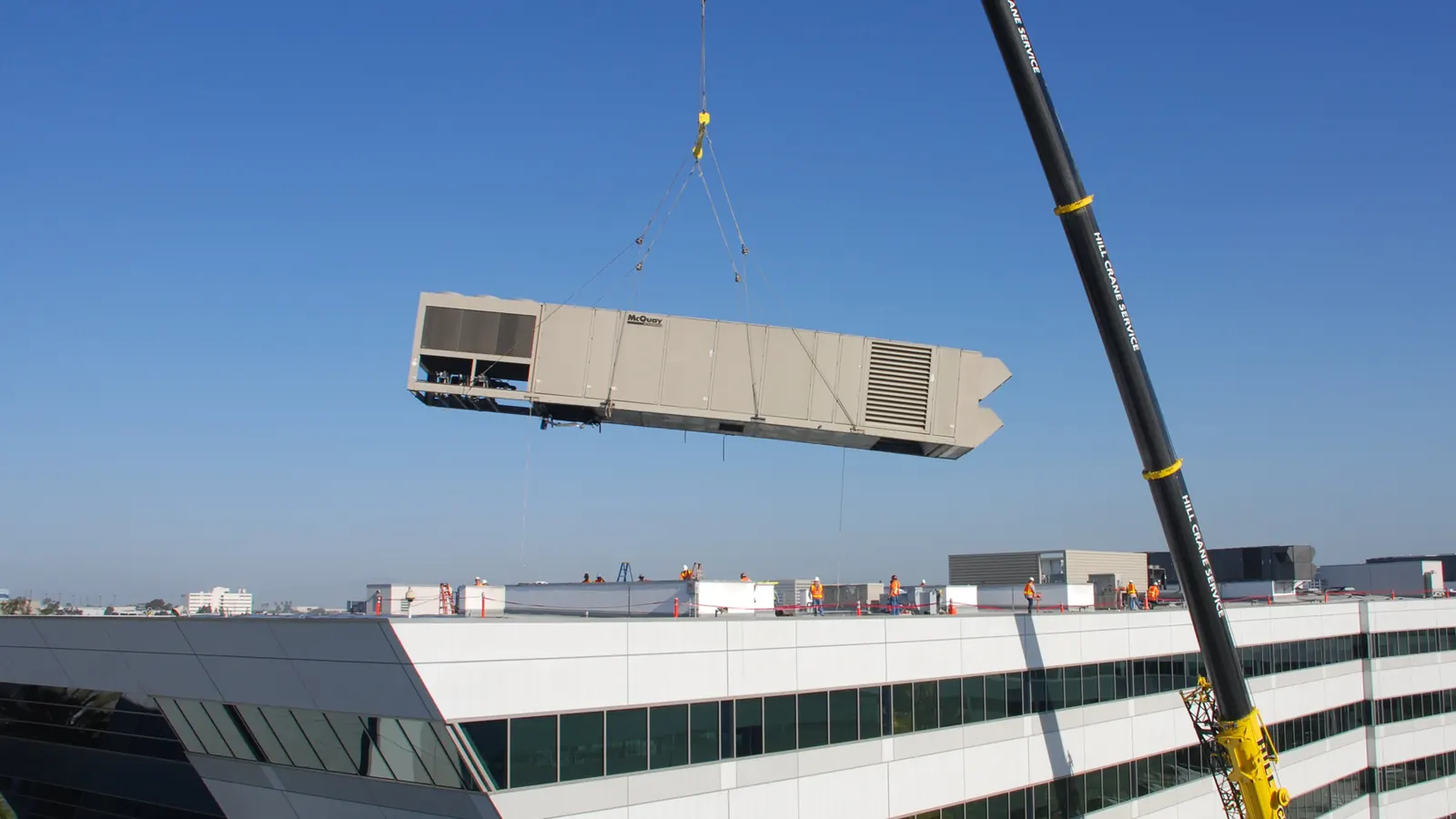
Our side of a New Jersey HVAC replacement
On a replacement, the survey has one extra job: the existing unit is logged with its age, capacity, condition and controls, and photographed or filmed while it still runs, because the early-replacement rules below depend on that record. The energy model, application and close-out follow the six steps on our retrofit process page.
Rivet is not an HVAC contractor, so a unit that has to be running again today is a job for a service company. We also don't offer repairs or maintenance contracts, and we don't work on single-family homes or new construction.
Commercial AC, boiler and chiller replacement across NJ
We plan replacements in existing commercial and multifamily buildings in all 21 New Jersey counties.
- Rooftop units and split-system commercial AC
- Steam and hot water boilers
- Air-cooled and water-cooled chillers
- PTACs in hotels and apartment buildings
- Heat pumps, including conversions from a boiler and separate cooling
Replacing working equipment early: the NJ baseline rule
The Board of Public Utilities' Technical Reference Manual sets how program savings are calculated. The current edition was adopted in August 2026 and applies from October 1, 2026.
It measures a working unit and a failed unit against different baselines, which matters most where the incentive is paid on savings. Atlantic City Electric's custom pathway, for example, pays per estimated annual kWh and therm saved.
- Equipment that has failed, is at the end of its useful life, or is in a condition the program doesn't know: savings are measured against a new unit that meets code or standard practice.
- Still working and replaced early: savings are measured against your existing unit for its remaining useful life, then against code or standard practice.
- That remaining-life period is capped at one-third of the life the manual assigns: 5 of 15 years for commercial air conditioners, PTACs and air-source heat pumps, and 6.67 of 20 years for gas hot water boilers.
- An old unit usually uses more energy than a new code-level one, so the gap counted in those years is wider.
Get NJ utility approval before the old unit comes out
The early-replacement baseline needs proof. For custom projects, the manual calls for a customer affidavit that the equipment can keep running through its remaining useful life and a photo or video of it operating, plus trend logs and maintenance records on larger projects.
None of that can be produced after the unit is gone.
The purchase order waits too. Atlantic City Electric requires custom measures to be approved before installation and the equipment bought after approval. JCP&L asks for applications before any equipment is purchased or installed. Both can inspect the existing equipment before work starts.
Both allow a 90-day lookback on prescriptive projects, meaning equipment from the utility's published list. JCP&L excludes every other project type.
When to replace commercial HVAC equipment
Published lifetimes disagree. The U.S. Department of Energy's 2024 standards rule assumed mean lifetimes of 21 to 30 years, depending on size, for commercial package air conditioners of 65,000 Btu/h and up; in the same rulemaking, the trade group AHRI put service lifetimes at 12 to 15 years.
Our guide to commercial HVAC life expectancy traces each of those figures to its source.
So we don't time a replacement from the nameplate date. We plan it from the unit's condition, a year of energy bills, and whether it still runs on the day the application goes in.
Common questions
Should we wait until our equipment fails before replacing it?
Usually not. A failed unit is measured against a new code-level unit rather than against itself, so the counted savings tend to be smaller, and on savings-based incentives so is the payment. Waiting also means paying the old unit's energy bills for longer.
Are there rebates for replacing commercial HVAC in New Jersey?
Yes. The state's investor-owned utilities run the business efficiency programs: PSE&G, JCP&L, Atlantic City Electric, Rockland Electric, New Jersey Natural Gas, South Jersey Gas and Elizabethtown Gas. What a replacement earns depends on the utility, the building's energy use, the equipment and, where the incentive is paid on savings, whether the old unit was still working.
Can the old unit come out before the application is approved?
Not on a project that relies on the early-replacement baseline. For custom projects, New Jersey's savings manual calls for an affidavit that the unit can keep running and a photo or video of it operating, and Atlantic City Electric and JCP&L can both inspect the existing equipment before work starts. None of that is possible once the unit is gone.
Send us 12 months of electric and gas bills
Twelve months of both bills is what the energy model runs on. We will tell you which units are worth replacing and what the incentive is likely to be before anyone orders equipment.
Sources
- NJ BPU, Program Year 6 Technical Reference Manual (order of Aug. 12, 2026)
- Atlantic City Electric, Prescriptive and Custom incentive brochure
- JCP&L Energy Save NJ for business, program FAQs
- DOE, commercial package air conditioners and heat pumps, 89 FR 44052 (2024)
- NJ Clean Energy Program, utility-run programs for businesses
Where to go next
- How a retrofit runsSix steps from survey to close-out, and the two you are involved in
- When to applyWhy the application comes before the equipment
- HVAC equipment life expectancy chartPublished lifetimes by equipment type, with sources
- How long commercial HVAC lastsWhere the lifetime figures come from
- Rooftop unit replacementWhat a rooftop swap involves and how RTU incentives work
- Commercial boiler replacementSteam and hot water plant in older buildings
- What it costsBy tonnage, per square foot, and after the incentive
- HVAC rebate applicationPreparing and tracking the utility application
- Programs that help pay for itDirect Install, utility incentives, 0% repayment and grants