Commercial HVAC assessment in New Jersey
A commercial HVAC assessment from Rivet Energy logs every heating and cooling unit in your New Jersey building and reads 12 months of electric and gas bills to show which equipment is likely to qualify for utility incentives. You get a unit-by-unit inventory, the utility program your building fits and a replacement order with the estimated incentive at each step. It is for commercial and multifamily buildings only, and if it leads to a replacement, licensed partner contractors do the installation.
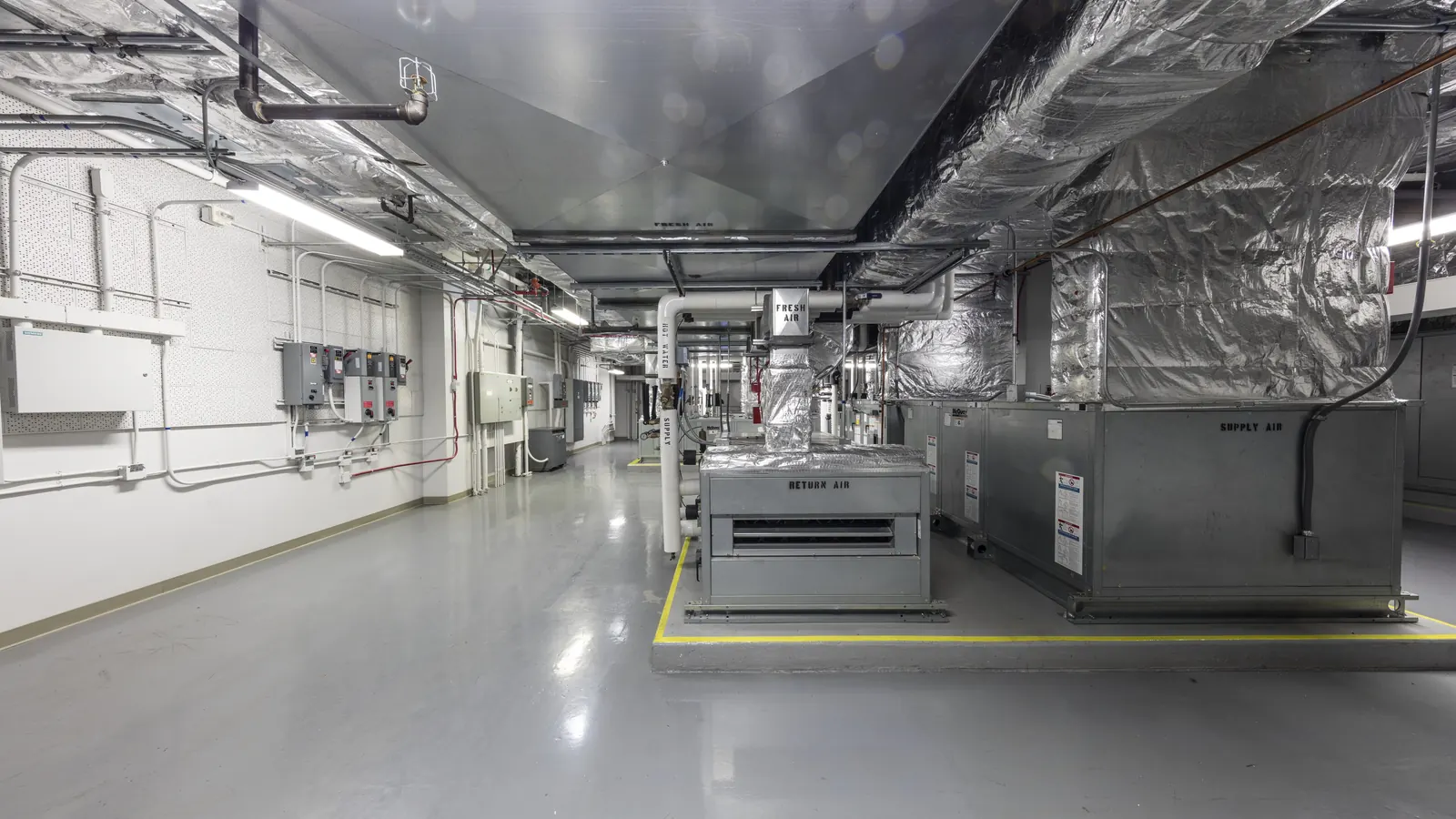
The HVAC system assessment, unit by unit
We walk the building from the mechanical room to the roof. For each heating and cooling unit we record:
- Nameplate data: make, model, serial number and, where shown, the manufacture date
- Capacity in tons or MBH, and which spaces the unit serves
- Refrigerant type, with R-22 units flagged. Under EPA's phaseout schedule, U.S. production and import of R-22 ended in 2020.
- Controls, including thermostat schedules, setpoints, economizer position and anything left running in manual
- Condition and runtime, such as short-cycling, visible wear, or plant running for empty floors
Your incentive track comes from 12 months of bills
The second half is your last 12 months of electric and gas bills, which in New Jersey also decide the utility program you start in.
Direct Install, the turnkey program for small and mid-sized customers, sorts buildings into tiers by peak electric demand and gas use over the past 12 months. Larger buildings use the utility's prescriptive, custom or engineered solutions pathways.
Utilities can adjust the limits and cap the dollars, so we check your utility's current terms first. If you fit Direct Install, its own on-site energy assessment is free, and we will tell you so.
The Direct Install tiers the Board of Public Utilities approved for January 2025 through June 2027:
- Tier 1: up to 100 kW of peak demand and up to 5,000 therms a year. Up to 80% of project cost.
- Tier 2: up to 300 kW or 40,000 therms, in an Urban Enterprise Zone, Opportunity Zone or Overburdened Community, or owned or run by a local government, K-12 public school or 501(c)(3) nonprofit. Up to 80%.
- Tier 3: 101 to 300 kW, or 5,001 to 40,000 therms. Up to 70%.
Which units to replace first
The result is a ranked list. Age, compared with published service-life figures, is one input, and an old unit that runs well can rank below a younger one that wastes energy.
The order is set while the old equipment is still in place, because on most pathways the application comes before the purchase, and a utility may pre-inspect to see what is there. The assessment is the record of those existing conditions.
A unit moves up the list when it:
- Is past its published service life and still running
- Shows waste in the bills, such as heating or cooling use that does not track the weather
- Is close to failing, since an emergency replacement made before approval can lose its incentive
- Earns a large incentive for its replacement cost
What you get from the assessment
A single report covers every unit and each utility involved.
- An inventory of every unit with age, capacity, refrigerant and condition
- Your incentive track with both the electric and the gas utility
- A replacement order, with the estimated incentive for each step
- A plain answer if there is no project worth doing
Where the assessment stops
This assessment covers the HVAC plant and the incentive question. For a whole-building energy audit, see our guide to New Jersey commercial energy audits.
Common questions
What is an HVAC system assessment?
A survey of a building's HVAC equipment: what is installed, how old it is, what condition it is in and how it is controlled. Ours adds 12 months of utility bills, so the result also shows which units are likely to qualify for New Jersey incentives.
What does the assessment cost?
It depends on the building, so we price it once we know what is there. Tell us about the building first; if it is small enough for your utility's Direct Install program, its free on-site assessment may be the better place to start.
Can a small business in NJ get a free energy assessment?
Yes, if the building qualifies for Direct Install, which your electric or gas utility runs. Under the current program design every Direct Install participant gets a site visit with a free on-site energy assessment, and eligibility runs up to 300 kW of peak demand or 40,000 therms a year, depending on tier.
Do you repair the problems you find?
We record them in the inventory, but a unit that needs fixing now is work for a service contractor. Rivet does not do repairs, maintenance or service calls.
Send us your last 12 months of bills to start
Send the bills or tell us about the building. We will tell you whether an assessment is worth doing, or whether the utility's own Direct Install visit is the better start.
Sources
Where to go next
- HVAC equipment life expectancy chartThe published service-life figures your units are compared against
- How long commercial HVAC lastsWhere each lifetime figure comes from, and why age is not the deciding question
- New Jersey commercial energy auditsWhole-building audits, and what the energy model is for
- HVAC rebate applicationsFiling with your utility once the assessment is done
- Commercial HVAC replacementWhat happens after the assessment ranks your units
- NJ program pathwaysDirect Install, prescriptive, custom and engineered, compared
- NJ assistance programs comparedWhere the free Direct Install assessment fits among the others
- When to applyWhy the application comes before the equipment, and the 90-day exception
- How a retrofit runsThe six steps, from survey to close-out